UNHCR PROJECT: Refugee and IDP Response
Provision of Protection and Assistance to Refugees and IDPs in Benue and Akwa Ibom states.
ABOUT THE PROJECT
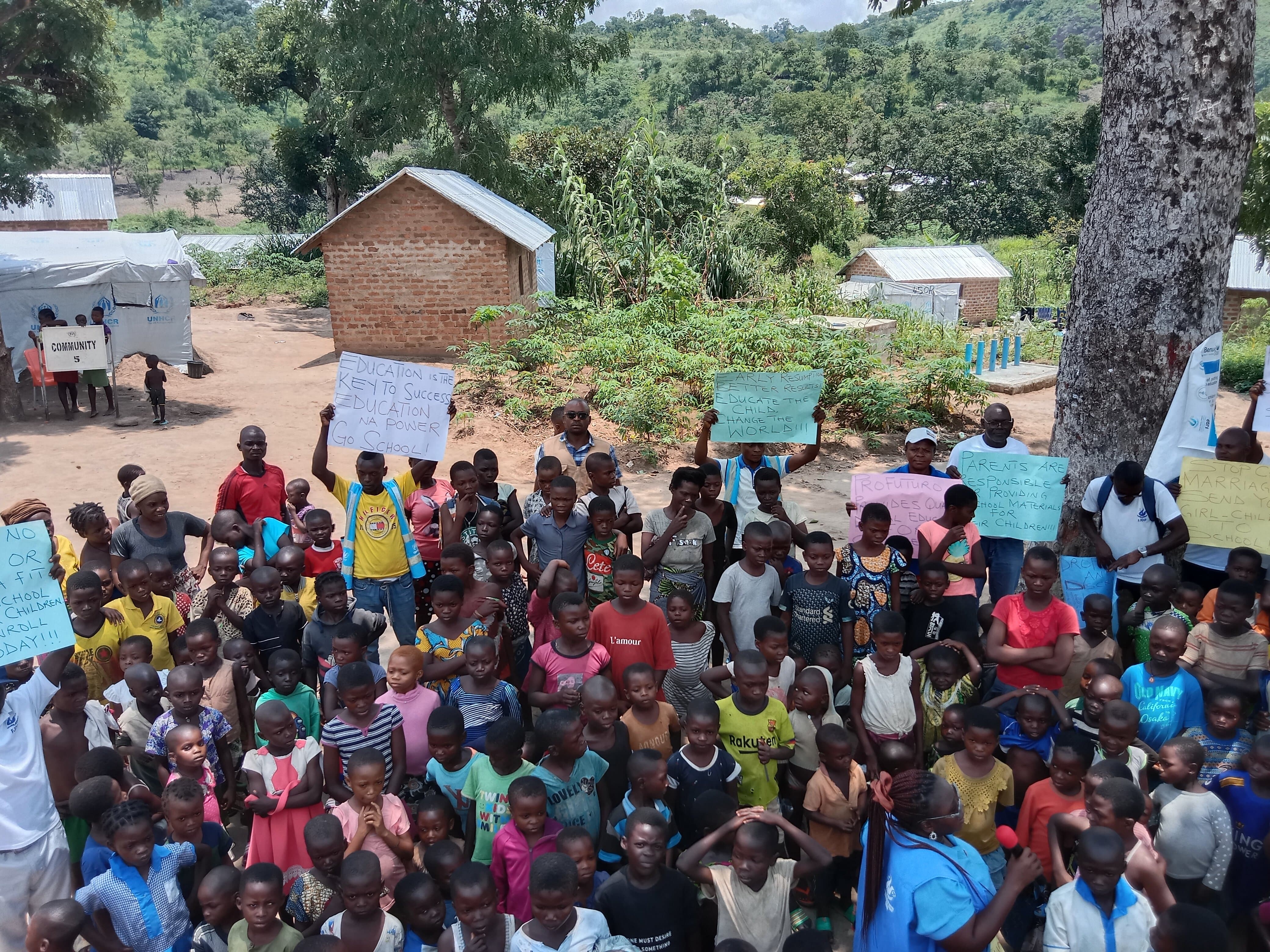
The project targets Anglophone Cameroonian refugees residing in host and border communities in Kwande, Benue State. As of 31 October 2019, the total number of registered refugees in Benue State stood at 6,608 individuals. There are four components through which FJDP will deliver assistance and services to the population of concern under this project. These include: Protection/Education, Cash-Based Interventions, Shelter and Infrastructure, and Warehouse Management.
The protection component of this project seeks to improve the protective environment for girls, boys, women, and men to promote resilience and restore dignity through the reduction of risk of Sexual and Gender-Based Violence, comprehensive case management services in Ikogyen settlement and the host community adjacent to the settlement.
Furthermore, the project will strengthen civil registration and documentation of Cameroonian Refugees in Benue State, particularly refugee children born in Nigeria, enhance refugees’ access to the territory, and reduce the risk of unlawful detention of all refugees. Through the project, protection of refugee children with and without specific needs, as well as persons with disability and with other specific needs, will be improved, and community empowerment that would smooth the participation of females in the leadership or decision-making process.
This project also seeks to ensure that 3500 Cameroonian refugee children have unhindered and unfettered access to quality primary and secondary education in a safe environment in Nigeria, and to ensure that no child is denied his/her right to education because his/her ethnicity, disability, sex, or religious affiliation.
This project again seeks to improve the protective environment for 1313 households of 2917 individuals to promote resilience and restore dignity through the provision of shelter kits for the construction of transitional shelters.
Finally, this project seeks to ensure that logistics and supply mechanisms are optimized to meet operational needs of UNHCR and partners providing protection and protection-related assistance to Cameroonian Refugees in Benue State, Nigeria. Through the project, storage and distribution of food items, non-food items, and shelter construction materials are needed for providing assistance to refugees in Ikyogen and Ogoja, which will be enhanced, thereby supporting effective delivery of assistance and interventions.
IDP PROJECT
This project seeks to improve the protection situation of IDPs and restore the dignity of the most vulnerable among UNHCR’s people of concern in Benue State region of Nigeria, through the provision of decent living conditions, and response to the most critical basic needs of the vulnerable Internally Displaced Persons. FJDP, working closely with UNHCR and in collaboration with UNDP and FAO, will seek to build a protective environment for IDPs and to promote resilience and restore dignity. The project will also use community-based protection approaches to reduce the vulnerability of the affected population to the herdsmen-farmers conflict through building and enhancing strong community-based protection structures so as to reduce cases of SGBV and child protection.
Operational Context
According to a recent study carried out by the Institution for Peace and Conflict Resolution (IPCR), the conflict between the Herders and Farmers in Nigeria has been identified as the single most widespread peace and security threat affecting 19 out of 30 states in Nigeria. The conflict has continued to register High casualties and tension throughout almost all states of the Federation regularly. Most reported in the middle belt and adjacent states, particularly Benue, Plateau, Kaduna, and Nasarawa. Between Herdsmen and local Farmers, the clashes over farm land/or pasture have increasingly taken religious undertones (Muslims vs Christians) with religious leaders publicly exchanging accusations, as well as ethnic connotations (Indigenes vs settlers) and the stereotypes that have heightened tensions, a development which has further polarized communities and complicated efforts at mitigating the violence. The Conflict undermines food security, encourages the proliferation of small arms and light weapons, and infringes on indigenous rights.
Thousands of lives have been lost, properties destroyed, and communities left in disarray, with Tens of thousands of Internally Displaced Persons all over many parts of the Middle Belt and other parts of Nigeria. Some estimates indicate that the communal violence between farmers and Herders claimed more lives in 2016 alone than the Boko Haram insurgency, hinting at its magnitude nationwide.
Benue State has an estimated population of 483,692 Internally Displaced persons (SEMA 2019) who are currently seeking refuge in official and unofficial camps in different L.G.A. This figure, however, does not reflect the actual number of IDPs documented by SEMA. The main reasons being that some IDPs are living in host communities, remote and inaccessible areas.
In most communities, IDPs, mostly women and children, have inadequate shelter and food, and are at risk of communicable disease and SGBV as sleeping spaces are not gender segregated. These camps are overcrowded and lack safe drinking water and proper sanitation, which has been compounded by open defecation. Children of school age are displaced from schools, forcing their drop out, while the livelihood of their caregiver is destroyed, further reducing household capabilities to finance basic education (BENGONET 2016). Demographic report of the state shows that the enrollment increased by 35% from 2012 – 2013, but by 2014 – 2016, the drop in enrollment rose to 60%.
In 2016, 86.7% of IDPs in adhoc camps of Logo, Buruku, Guma, Kwande, and Agatu LGA live in intrusive reactions, Nightmares and flashbacks, hyper surveillance, and psychosomatic stress disorders. This has risen to 89% as a result of multiple displacements and stressful experiences created by armed violence. This poses a strong challenge in achieving post-conflict recovery and reintegration, as most of the IDPs are still living in deplorable conditions in communities and camps.